


Gum disease is a common concern, but many people are unsure what it means for their long-term oral health. You might notice a little bleeding when you brush and wonder if it’s a serious problem. At Markham Dental, we believe that understanding the stages of gum disease can help you take the right steps toward protecting your smile.
Whether or not periodontal disease can be reversed depends on its stage—early gum disease is reversible, while more advanced stages can be managed to stop progression. Your dental team can help you figure out what stage you are in and what your options are for preventative dental care.
What Are the Stages of Gum Disease?
Whether or not you can reverse gum disease depends on how far it has progressed. It’s helpful to think of it as having two main phases. One phase is reversible, and the other is a condition you can manage with professional support.
Gingivitis—The Reversible Stage
Gingivitis is the first and mildest form of gum disease. It’s characterized by gum inflammation from plaque buildup. At this point, the infection has not affected the bone supporting your teeth, so the damage isn’t permanent and is typically reversible with professional care and a consistent home routine.
Periodontitis—The Manageable Stage
If gingivitis isn’t addressed, it can advance to periodontitis. This stage involves damage to the bone and tissues that hold your teeth in place. While you cannot regrow lost bone, you can manage the condition with treatments like periodontal surgical therapy to prevent it from getting worse.
Key Signs of Gum Disease
It’s possible to have gum disease without any discomfort, but there are some common signs you can look for:
- Gums that appear red or swollen
- Bleeding when you brush or floss
- Persistent bad breath
- Receding gums that make your teeth look longer
- Tender or sore gums
If you notice any of these signs, it’s a good idea to schedule a dental visit. We can determine the cause of your discomfort and recommend the right course of action.
How a Dentist Can Help Treat Periodontitis
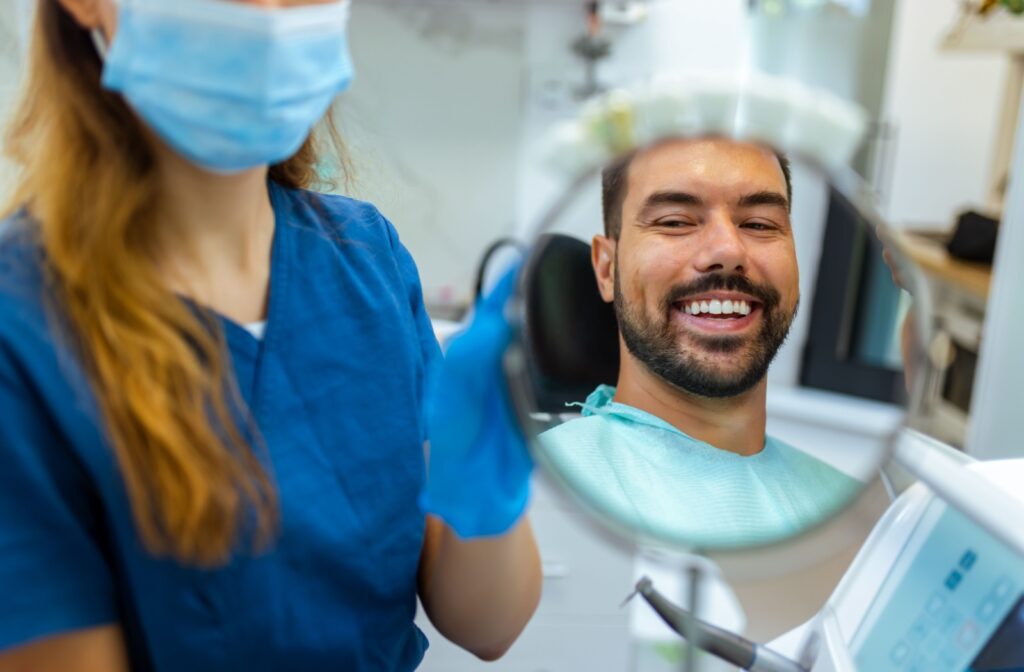
When your daily routine isn’t enough, professional treatments can make a difference. As your dentist in Markham, ON, we can check your gums and create a plan that fits your needs.
Professional Cleanings & Check-ups
For early-stage gum disease, regular professional cleanings may be all that’s needed. These appointments remove the plaque and tartar buildup that your toothbrush can’t reach. This, in turn, helps reduce inflammation and can reverse gingivitis.
Deeper Cleaning for Mild Gum Disease
For periodontitis, a non-surgical treatment called scaling and root planing is a common first step. This procedure involves cleaning deep below the gumline to remove bacteria and tartar from the roots of your teeth. It also smooths your tooth roots to help your gums reattach properly.
Options for More Advanced Cases
If periodontitis is more advanced, your dentist may discuss other options. These treatments can include procedures like gum grafts or pocket reduction to help restore damaged tissue. Your dentist can explain the different approaches.
Your Role in At-Home Care & Management
Professional treatment is just one part of the equation. What you do every day at home plays a huge part in reversing early gum disease.
Improve Your Daily Routine
Following the Canadian Dental Association’s guidance on proper brushing and flossing is fundamental for your oral health. Brushing and flossing remove the plaque that causes gum disease before it can harden into tartar. They also help prevent bacteria from building up again after your treatment.
Tools to Help You Succeed
Your dental team might suggest dental hygiene tools to help you clean more effectively at home. These might include an electric toothbrush, which can be more efficient at plaque removal, or a water flosser. Special interdental brushes can also help you clean tricky spaces between your teeth.
What Happens If Periodontitis Is Left Untreated?
Ignoring the signs of gum disease can lead to more significant health issues down the road. It’s not just about your mouth—gum disease can also affect your overall well-being. The consequences of inaction can be serious.
The Risk of Tooth & Bone Loss
Advanced periodontitis can destroy the bone that supports your teeth. Without treatment, this causes teeth to become loose as their foundation weakens. Eventually, it may lead to tooth loss, requiring solutions like dental implants to restore your smile.
The Connection to Overall Health
The inflammation and bacteria from gum disease may also enter your bloodstream and affect other parts of your body. Research continues to explore the link between oral and overall health.
Taking a proactive approach is key to managing your gum health for the long term. A check-up with your dentist in Markham, ON provides clarity on the state of your gums and helps you create a plan. Addressing issues early makes treatment simpler and more effective.
At Markham Dental, we understand that your schedule is busy, which is why we offer evening and Saturday appointments to fit your life. You can book online, and our direct billing and financing solutions are available to help make care accessible. Call today to schedule your consultation and protect your oral health.
Contact details
Markham Dental General and Cosmetic Dentistry
8241 Woodbine Ave, Unit 17, Markham, ON L3R 2P1
Email: [email protected]
In Case of Emergency Call
(365) 659-4701
To schedule an appointment, please fill out the adjacent form.
Book An Appointment
Book your appointment online!

Find Our Clinic

Call for an appointment

Feel free to message us!
WE’RE RANKED AS A TOP 3 DENTIST IN MARKHAM!