

Key Takeaways
- Snoring can start when your tongue, lips, or jaw relax during sleep.
- Simple mouth and breathing exercises can help train muscles that support your airway.
- A dental sleep visit can help review snoring, sleep apnea signs, and oral appliance options.
- Markham Dental offers evening visits, Saturday hours, online booking, insurance support, and financing options.
At Markham Dental, a loud snore can turn a quiet bedroom into a long night. You may wake with a dry mouth, feel foggy at work, or hear that your breathing sounded rough while you slept.
Myofunctional therapy exercises can help reduce snoring by training your tongue, lips, cheeks, and nose breath habits to support a clearer airway during sleep.
Myofunctional Therapy Exercises & Your Sleep
Myofunctional therapy focuses on the small muscles in your mouth and face. These muscles help guide how your tongue rests, how your lips close, and how you breathe when your body slows down at night.
Your tongue posture during rest matters. If your tongue falls back during sleep, it can crowd the space behind your throat. That narrow space can lead to vibration, which you hear as snoring. Practice can help your tongue rest higher against your palate, which is the roof of your mouth.
Your lip seal at night also plays a role. When your lips fall open, you may breathe through your mouth. That can dry your mouth and throat, and it may make snoring louder.
Your nose breath habits matter too. Nose breathing helps air move in a steadier path. If you often wake with a dry mouth or sore throat, your dental team can help look at mouth posture, bite, and signs that sleep breathing needs more care.
Signs Your Snore May Need Dental Care
A soft snore now and then may happen after a cold or a late night. A loud snore most nights deserves attention, especially when it comes with poor sleep or daytime fatigue.
- You snore loudly most nights.
- You wake with a dry mouth after sleep.
- You feel tired, foggy, or slow during the day.
- You wake with headaches or jaw tension.
- Your sleep partner notices pauses, gasps, or rough breathing.
Dental sleep care can help connect these signs with what is happening in your mouth and airway. A dentist can check your bite, tongue space, jaw position, tooth wear, and soft tissue. These details can help shape a care plan that fits your sleep concerns.
Simple Mouth Exercises For Your Routine
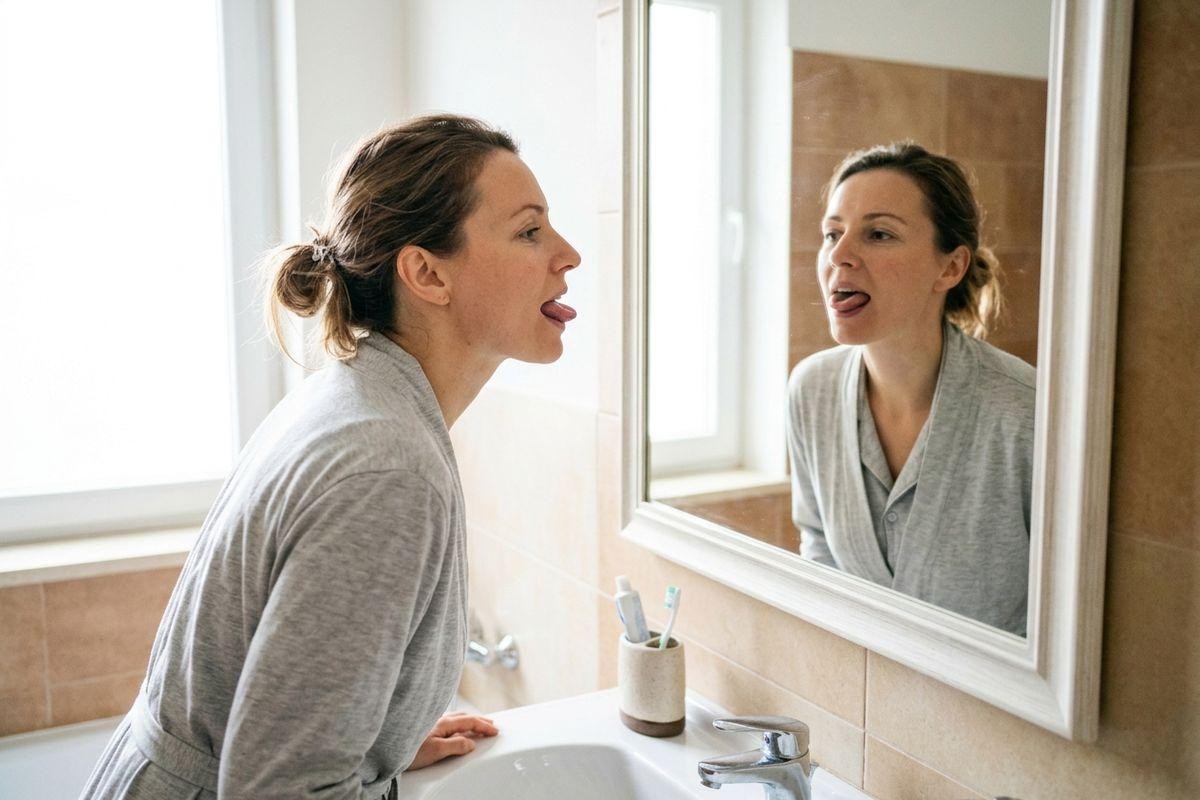
Mouth exercises work like small strength drills. They do not need much space or equipment. You can do them while standing at the bathroom mirror or sitting at your desk during a short break.
Tongue Position Practice
Start with your tongue resting on your palate. Keep the tip of your tongue just behind your front teeth, without pushing against them. The rest of your tongue should lift gently toward the roof of your mouth.
- Your tongue rests on your palate.
- You create a gentle suction hold and keep it for about 5 seconds.
- You repeat the hold 10 slow times, once or twice a day.
Think of it as a quiet lift, not a hard push. Your jaw can stay relaxed, and your teeth do not need to clench. Over time, this can help your tongue learn a more stable rest position.
Lip & Cheek Tone
Your lips and cheeks help guide mouth closure and air movement. When these muscles feel weak or tired, your mouth may fall open during sleep. Short daily practice can help build awareness.
- You close your lips and breathe through your nose.
- You hold air in one cheek for about 5 seconds, then move it to the other side for 5 seconds.
- You repeat the full sequence 5 times, once or twice a day.
Keep the movements slow and controlled. If your jaw gets sore, pause and let your dental team know at your next visit.
Nose Breathing Practice
Nose breathing supports a steadier airflow than mouth breathing, and it’s worth practicing on its own, not just during sleep. Sit or stand comfortably with your lips closed and jaw relaxed.
- You breathe in through your nose for about 4 seconds.
- You breathe out through your nose for about 6 seconds.
- You repeat for 5 rounds, once or twice a day.
This can feel slow at first, but a longer exhale can help calm your breathing pattern over time.
Dental Sleep Services & Your Care Plan
Snoring can have more than one cause. Your tongue posture may play a part. Your bite, jaw position, airway size, or sleep apnea risk may also matter. That is why a dental sleep visit can be useful.
At Markham Dental, the team can review sleep apnea care options and snoring concerns. A snore appliance may be discussed if it fits your needs. This type of oral appliance is worn during sleep and can help guide your jaw in a way that supports airflow.
An Invisalign consultation may also help if tooth position or bite changes affect how your jaw rests. Invisalign is not a snoring treatment by itself, but bite details can be part of the wider picture.
If dental anxiety makes care feel hard, oral sedation and IV sedation are available for certain visits. The team can explain what to expect in plain language, so you know the next step before treatment starts.
Care With A Dentist In Markham, ON
Your schedule may already feel packed before a dental visit lands on the calendar. Markham Dental offers evening visits, Saturday hours, and family-friendly options to help you fit care around work, family, and daily life, with fee guide pricing and support for major insurance plans.
If snoring is affecting your sleep, or your partner’s, Markham Dental can help you talk through what’s going on and find a plan that fits. Book online or choose an evening or Saturday visit that works for your week.

