

Key Takeaways
- Jaw clicks can come from grinding, joint strain, or bite changes.
- Pain, lockjaw, headaches, or ear pressure mean it’s time to book a visit.
- Soft foods, warmth, and jaw rest can help calm short-term soreness.
- A dentist can review your bite and discuss options like night guards, Invisalign, or Botox.
Jaw Clicks & Signs to Watch
Your jaw should open and close with little thought. Then one day, lunch comes with a sharp click. A yawn feels stiff. Your jaw pops near your ear, and the sound follows you through snacks, meetings, and evening meals.
A clicking jaw usually comes from strain in the jaw joint, tight muscles, teeth grinding, or a bite change, and a dentist can help find the cause and discuss care that may reduce the click.
A click without pain may not feel urgent, but your jaw gives useful clues. The joint sits close to your ear, so jaw trouble can feel like ear pressure, a dull headache, or face tension after a busy day. If you clench during work calls or wake with sore cheeks, your jaw may be under more stress than you notice.
- Clicks during meals can happen when the jaw joint moves out of its usual path.
- Jaw lock or stiffness can make it hard to open wide for food, brushing, or yawns.
- Headaches or ear pressure can show up when jaw muscles stay tight for long periods.
Causes & Triggers Behind Jaw Clicks
Your jaw joint works like a small hinge with a soft cushion inside. When muscles pull too hard or the bite does not meet evenly, that cushion can shift. The click you hear may be the joint moving over that cushion as your mouth opens or closes.
Stress can play a role. You may clench your teeth while reading emails, driving, or lifting weights. At night, grinding can leave flat spots on teeth and make jaw muscles feel tired by morning.
- Teeth clench or grind when the jaw muscles stay active during sleep or focus-heavy tasks.
- Jaw joint strain can follow wide yawns, chewy foods, nail biting, or long dental visits.
- Bite or tooth shifts can change how your teeth meet and add pressure to one side.
Jaw clicks can also connect with sleep concerns. If you snore, wake up with a dry mouth, or feel tired after a full night in bed, sleep apnea may be worth discussing. A dental visit can help connect these signs with your jaw and airway.
At-Home Steps for Jaw Relief
Small changes can help your jaw calm down while you wait for an appointment. Think of it like resting a sore ankle. You reduce the load for a short time so the area has less stress.
- Choose soft foods for short periods, such as eggs, soup, pasta, yogurt, fish, or cooked vegetables.
- Place a warm cloth on your jaw for 10 to 15 minutes to help tight muscles relax.
- Give your jaw gentle rest by keeping teeth apart and lips closed when you are not eating.
Try to skip gum, hard candy, thick sandwiches, and chewy steak when your jaw feels sore. Cut food into smaller bites. If your jaw clicks when you yawn, support it with your hand and keep the opening smaller.
During the day, your teeth should usually rest slightly apart. If they stay pressed together while you work, drive, or use screens, your jaw muscles may be working harder than they need to.
Dental Care Options for Jaw Clicks
If the click keeps coming back, a dentist can check how your jaw moves and how your teeth meet. At Markham Dental, the team can review your symptoms, look for tooth wear, and discuss care that fits your schedule, comfort level, and budget.
Jaw & Bite Review
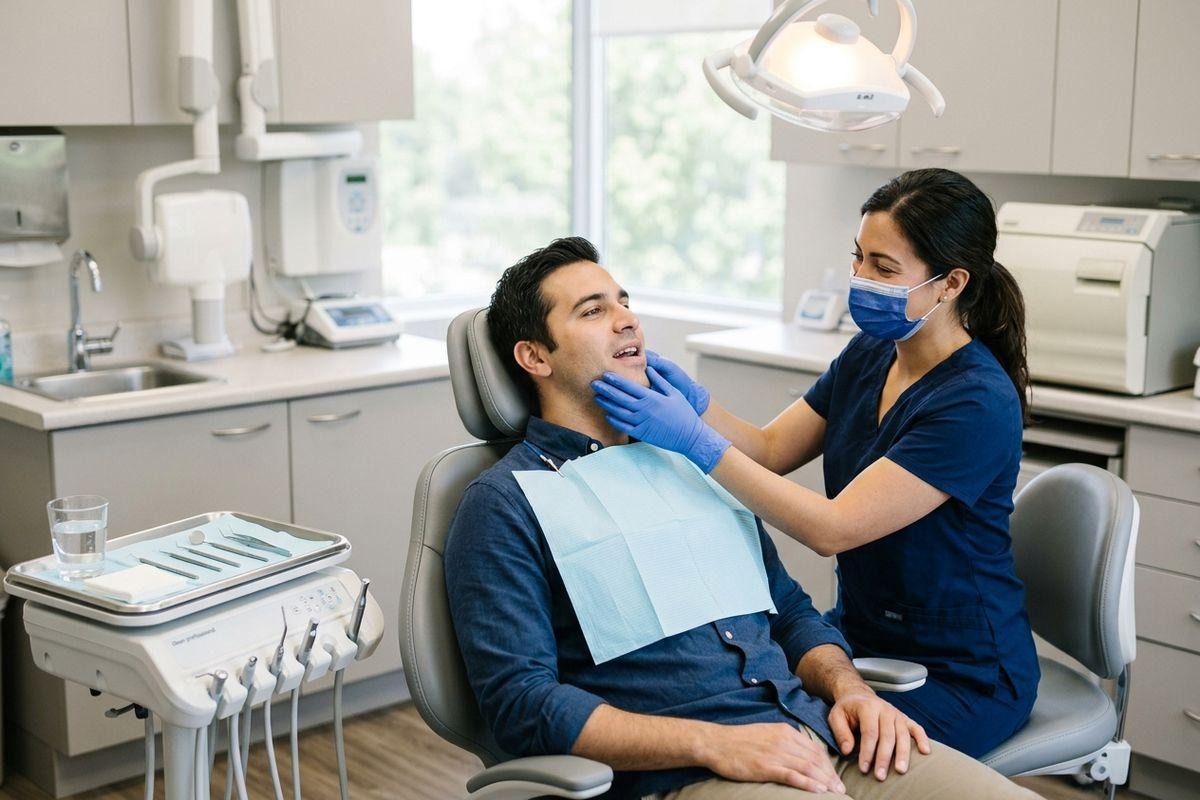
A jaw and bite review is simple and focused. The doctor may ask when the click started, what makes it worse, and whether you have pain, lockjaw, headaches, or sleep concerns.
- A joint movement check can show whether your jaw opens straight or shifts to one side.
- A bite pattern review can show where pressure lands when your teeth come together.
- A tooth wear check can show signs of grinding, chips, or flattened biting edges.
This visit can help you understand what your jaw is doing in plain language. You can then talk through next steps without feeling rushed.
Treatment Options to Discuss
Care depends on the cause. Some people need muscle support. Others need bite support. Some need help with sleep-related breathing signs.
- Night guards can help protect teeth from grinding and reduce strain on jaw muscles.
- Invisalign can help with bite concerns when tooth position adds uneven pressure.
- Botox can help manage jaw tension for some people who clench often.
If dental anxiety keeps you from booking care, oral sedation and IV sedation may help you feel more at ease during treatment. The team can also discuss financing from as low as $75 per month and fee guide prices, so cost feels clearer before care starts.
When to See a Dentist in Markham, ON
A quick click now and then may not disrupt your day. But jaw pain, locking, or regular headaches deserve attention. A dentist can help you sort out whether the issue is muscle tension, grinding, bite changes, or a sleep-related concern.
Visit Timing
- Book a visit if pain comes with jaw clicks during meals, yawns, or speech.
- Book a visit if your jaw locks open or closed, even for a short time.
- Book a visit if you snore, wake often, or have sleep apnea concerns with jaw soreness.
Short-notice appointments and dental emergency care can help when jaw symptoms interrupt your day. If the click starts after an injury or you cannot open your mouth well, a prompt visit can help you get direction.
Visit Comfort & Access
- Evening and Saturday hours can help you fit care around work and family plans.
- Online calendar access lets you choose a time without a phone call.
- Oral and IV sedation can support comfort for longer visits or dental anxiety.
Markham Dental accepts major insurance plans and offers direct billing for basic general services. If your jaw keeps clicking, the team can help you review the cause and discuss care options that match your needs. Book online with Markham Dental for care that fits your schedule, including evening and Saturday hours.

